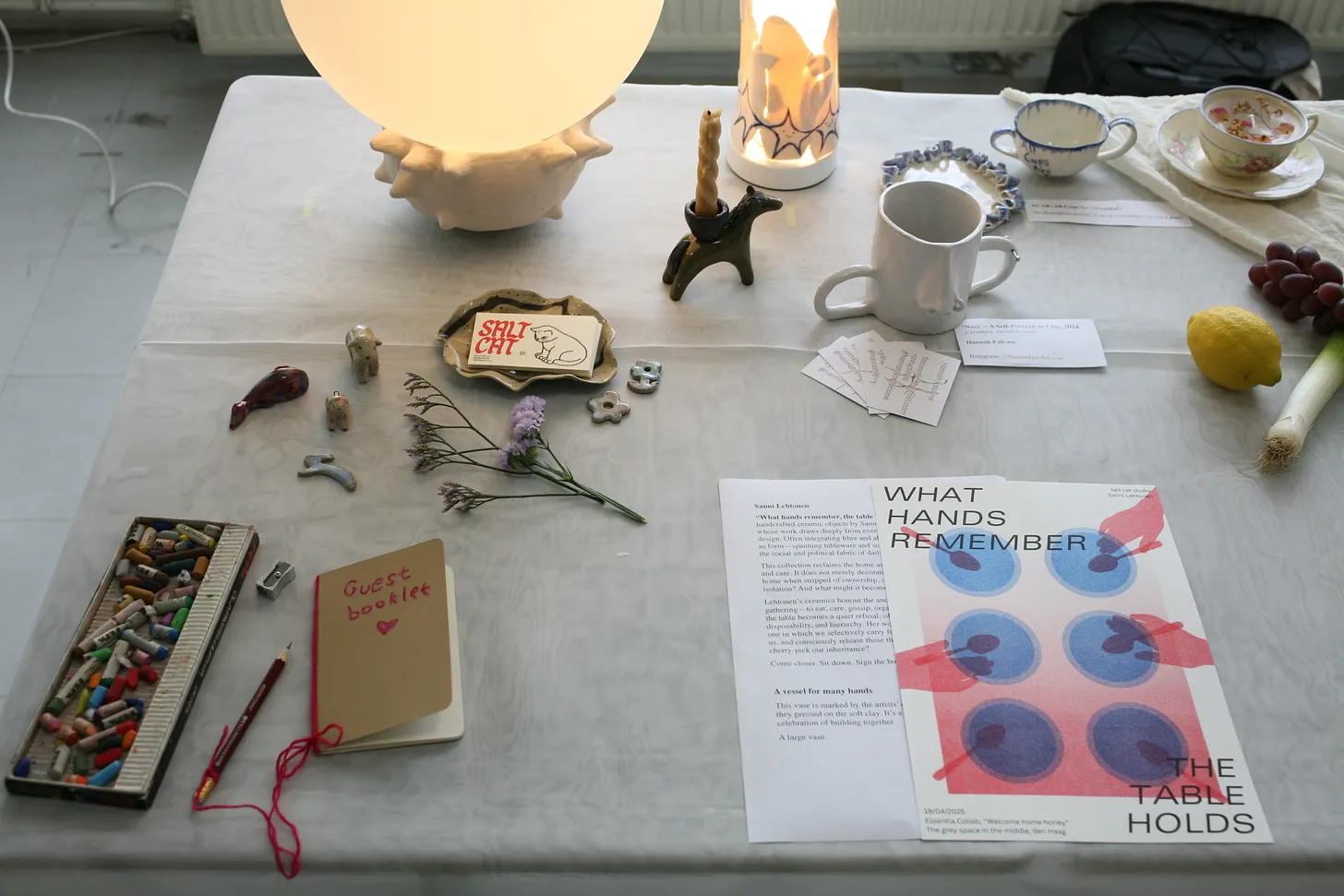
There are gestures that outlive the hands that made them. A way of folding dough, of weaving cloth, of shaping clay. Movements passed on through generations without ever being written down, carried quietly across time in the body’s memory. I think of these gestures as a kind of language. A language that speaks through repetition, care, and politics of touch. A language my grandmother spoke so beautifully, as grandmothers often do. Without words, they leave a legacy through the craft that is reduced into a domestic duty, but should be regarded as art.
Because the table cloths she carefully weaved with a loom from scratch truly are art. The weaving happened in between her other errands; cooking for the family, cleaning and scrubbing, mending clothes worn out in the farm work. Today, these table cloths hold such a sacred place in our family that we don’t even dare to use them; they’re stashed away in a closet by my mother. In her mind usage risks staining them, and it would be like staining her image. Yet for when she was taught weaving, it was a measure of her value as a woman, as a keeper of the house. She was not taught these skills to be empowered through creation, but to practice her gendered duties; servitude to a husband and care of children.
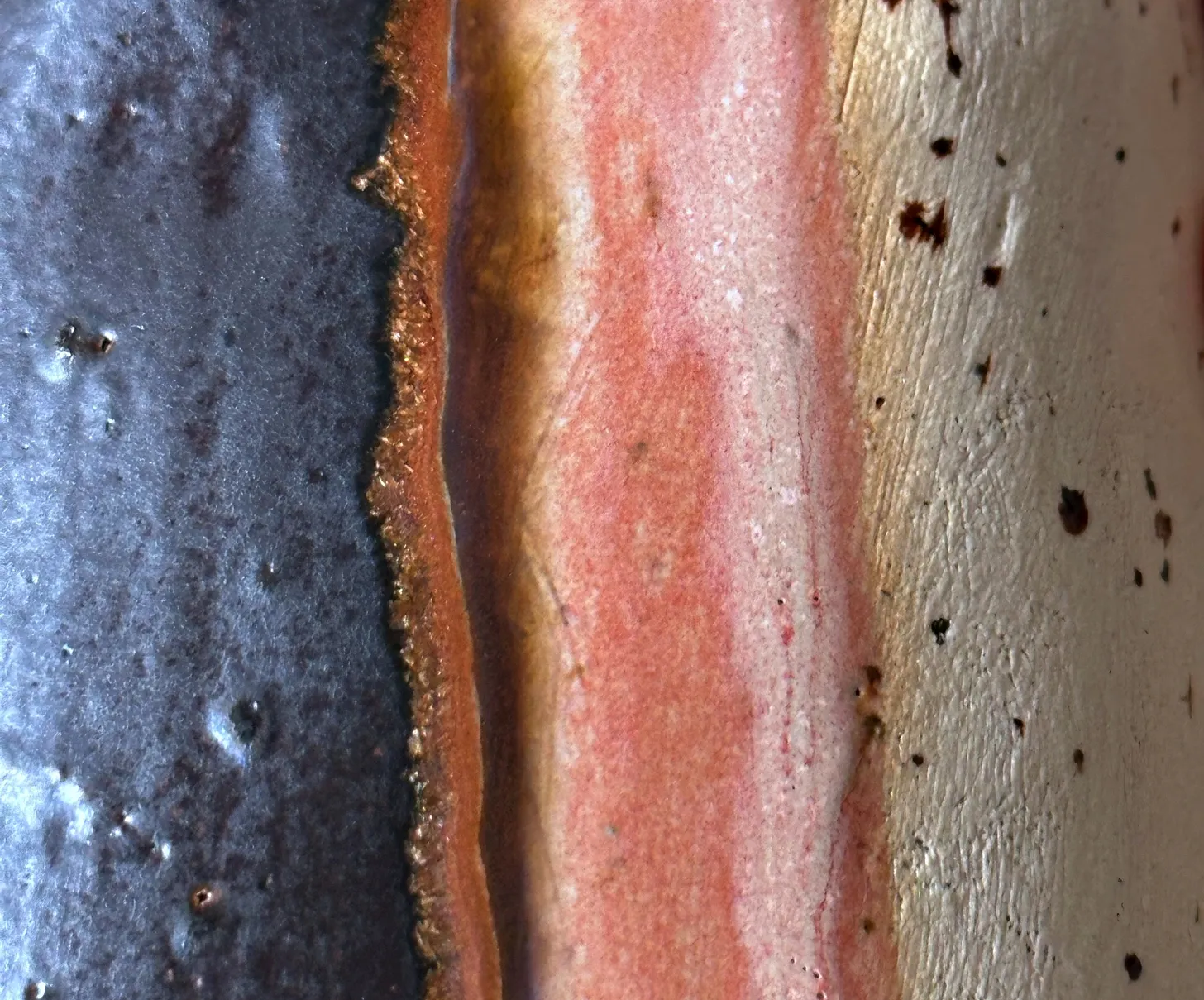
When I began the research process for my first exhibition, what hands remember, the table holds, I was thinking about these silent transmissions. I wanted to understand how craft carries not just beauty, but history: of the politics of labour, gender, belonging, resistance. The way we make and share things reflects the structures we live within. Even the most domestic of gestures, weaving a cloth or cooking a meal, exists inside systems of value and exclusion. Yet within those gestures, something more enduring persists: a knowledge that resists commodification, a rhythm of care that refuses to disappear.
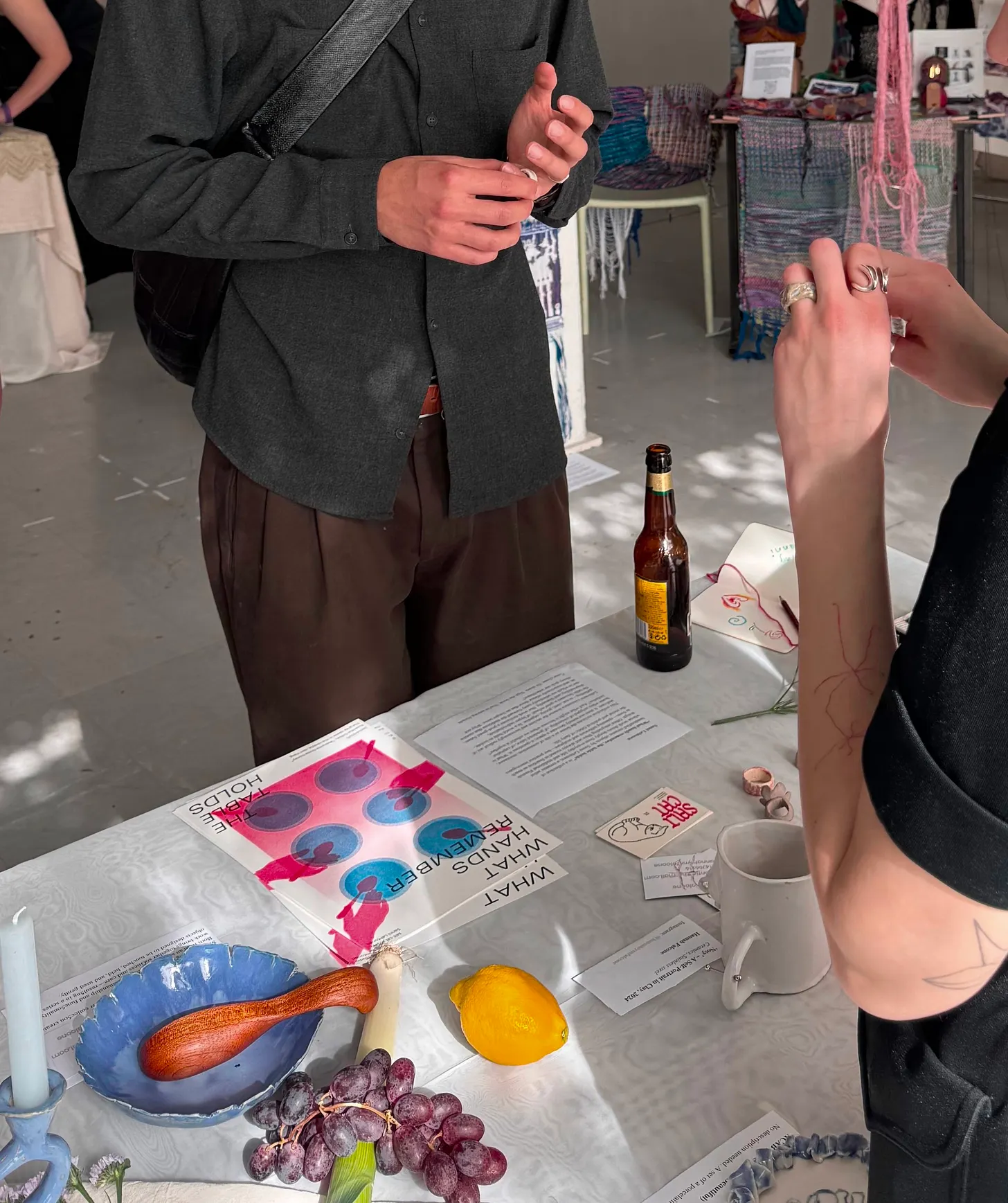
The table is an endless metaphor for power. Who sits where, who serves the food, who eats first; from family dinners to parliaments and boardrooms, the table maps our hierarchies. It can unite and it can exclude. Every invitation implies someone left outside the door. To gather around a table, then, is never neutral; it is always a political act.
Still, the same table that divides can also be reclaimed. When we share food, a cup of tea, or a story, we enact a counter-politics. We remind ourselves that solidarity can begin in the simplest of ways; by recognising each other’s presence, by listening, by passing something from one hand to another. Around a table, class, culture, and experience can meet on common ground. The act of gathering becomes an act of defiance, a refusal of the systems that keep us isolated and competitive. It teaches us how to be together.
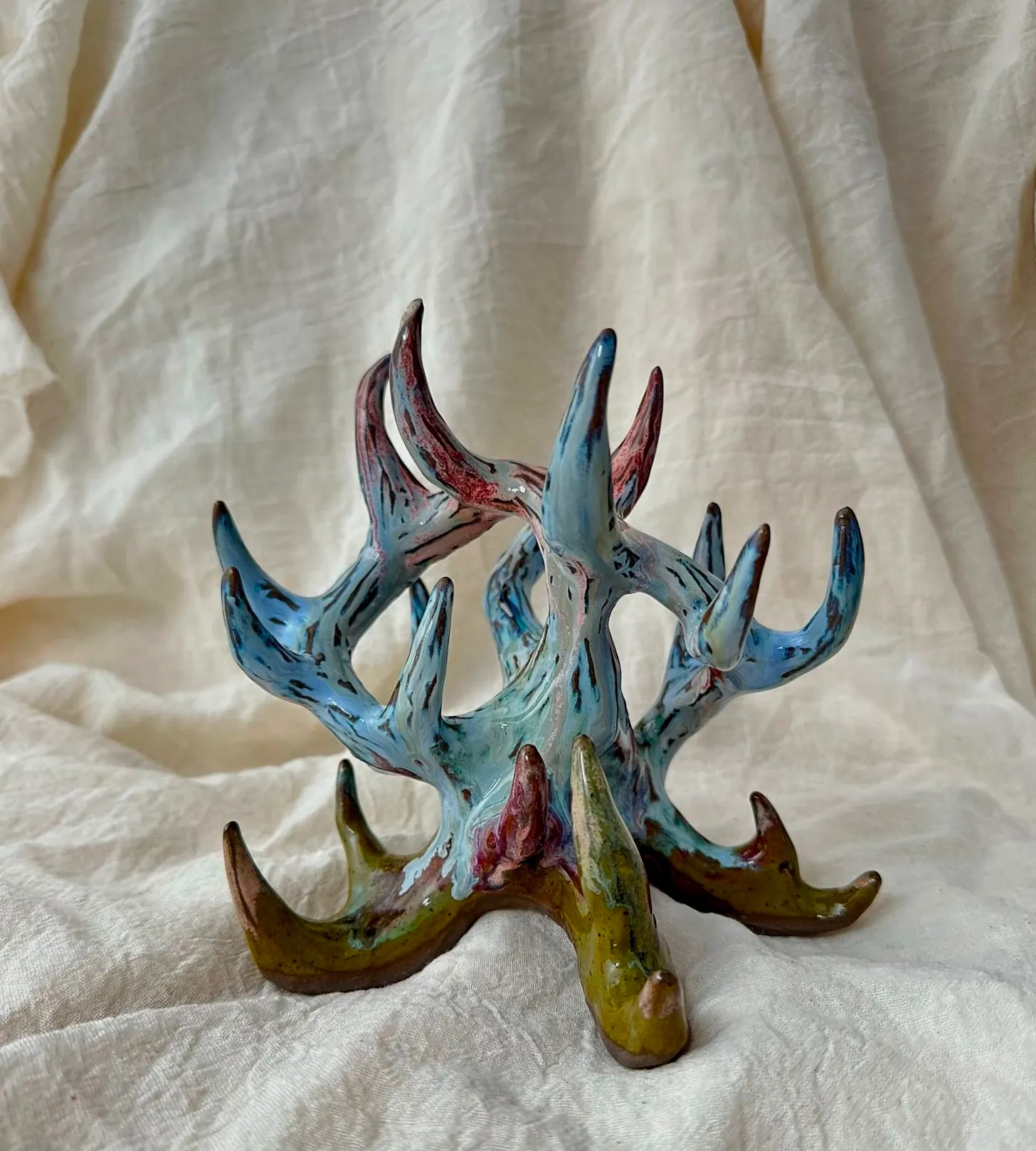
Clay helps me think about this because it carries the same tension: it is soft and strong, collective and personal. It remembers touch but resists mastery. To work with clay is to accept imperfection and to trust in the undertaking. The material teaches humility; it insists that no form, like no community, can ever be entirely finished, nor can you ever have full control over its formation. Nor should you; the organic forming into being, and the trust one has in that process, are essential for the value that it gives, and represents.
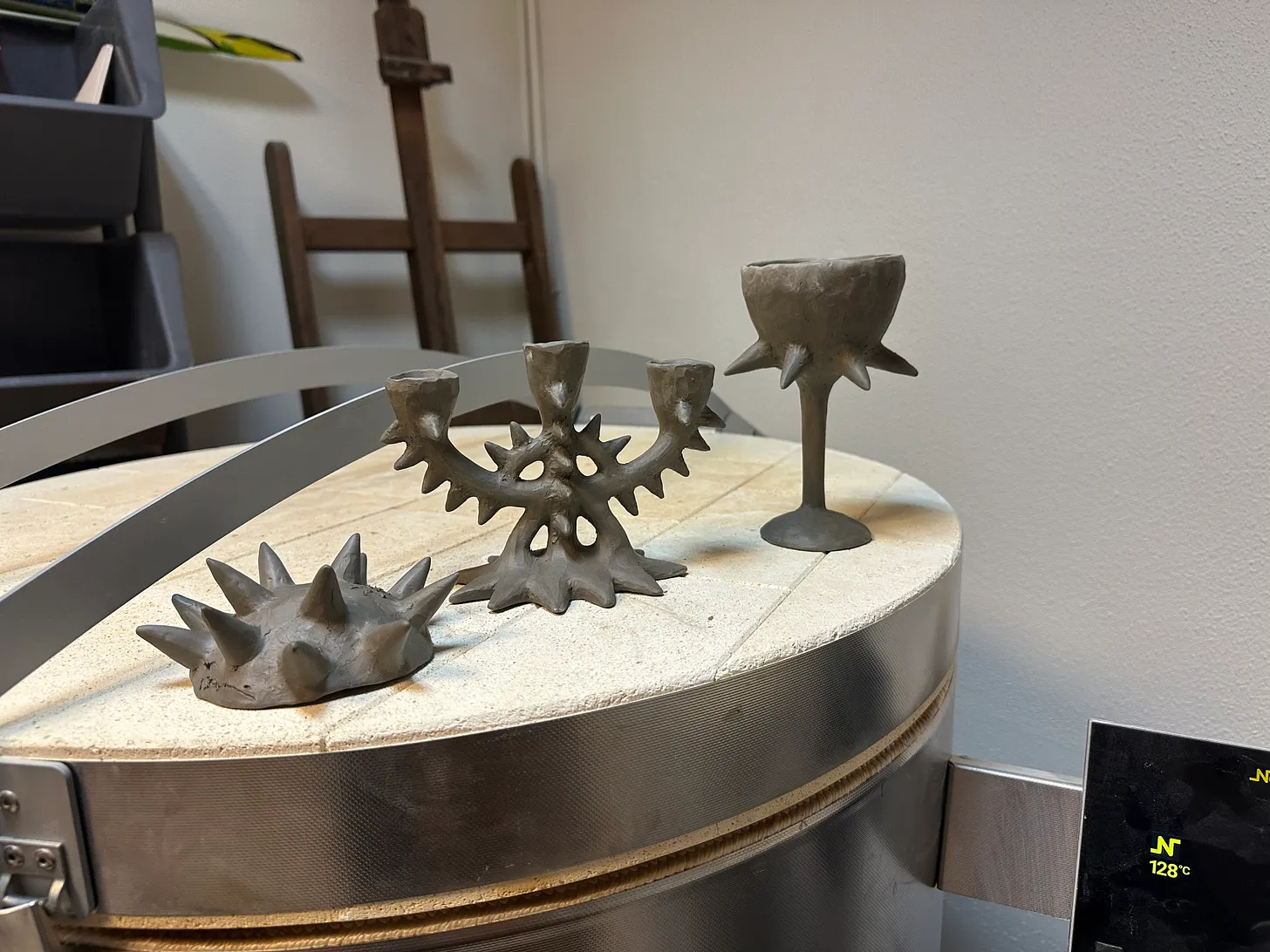
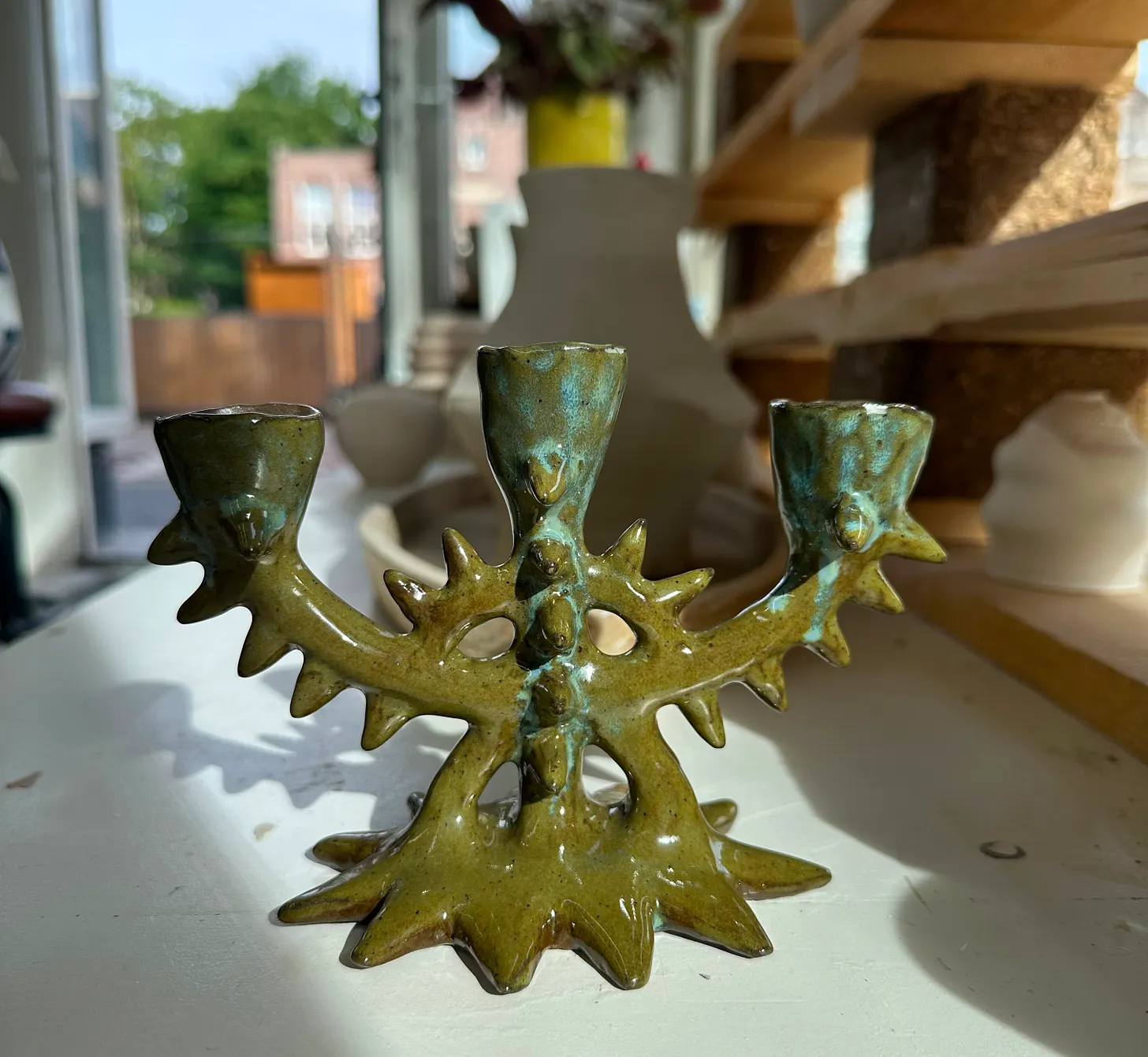
My practice often begins with ordinary forms such as a cup, a plate, a vase; the objects that move between hands and bridge the space between people. These are not neutral shapes. In Finland, craft traditions have long been tied to survival and hard work. They tell stories of endurance, but also of constraint, particularly so for women and for the Indigenous Sámi people, whose creative labour was confined to domestic duty or suppressed in the name of assimilation. To honour these crafts today means to reclaim them: to bring them back into the hands they belong to, expose the systems that once limited them, and to shape them anew. It means looking without nostalgia, releasing their hierarchies, and allowing ourselves to cherry-pick our inheritance, to carry forward what nourishes us, and let go of what harms.
The table becomes the place to test these questions. It holds the contradictions of our lives: love and exploitation, generosity and control. It is both the symbol of the home and the blueprint of the state. On a micro level, it shapes our family rituals; on a meso level, it structures workplaces, meetings, ceremonies; on a macro level, it reflects the distribution of global power. The table, in all its forms, organises the world.
But it can also reorganise it.
I imagine a long, uneven table that stretches beyond borders. A table where all workers sit side by side. A table where we eat slowly, where stories are shared and power circulates differently. Here, the act of gathering becomes a rehearsal for another kind of society; one built not on extraction but on relation. The table teaches us how to begin again, how to build solidarity that moves across class and culture, how to make room for everyone.
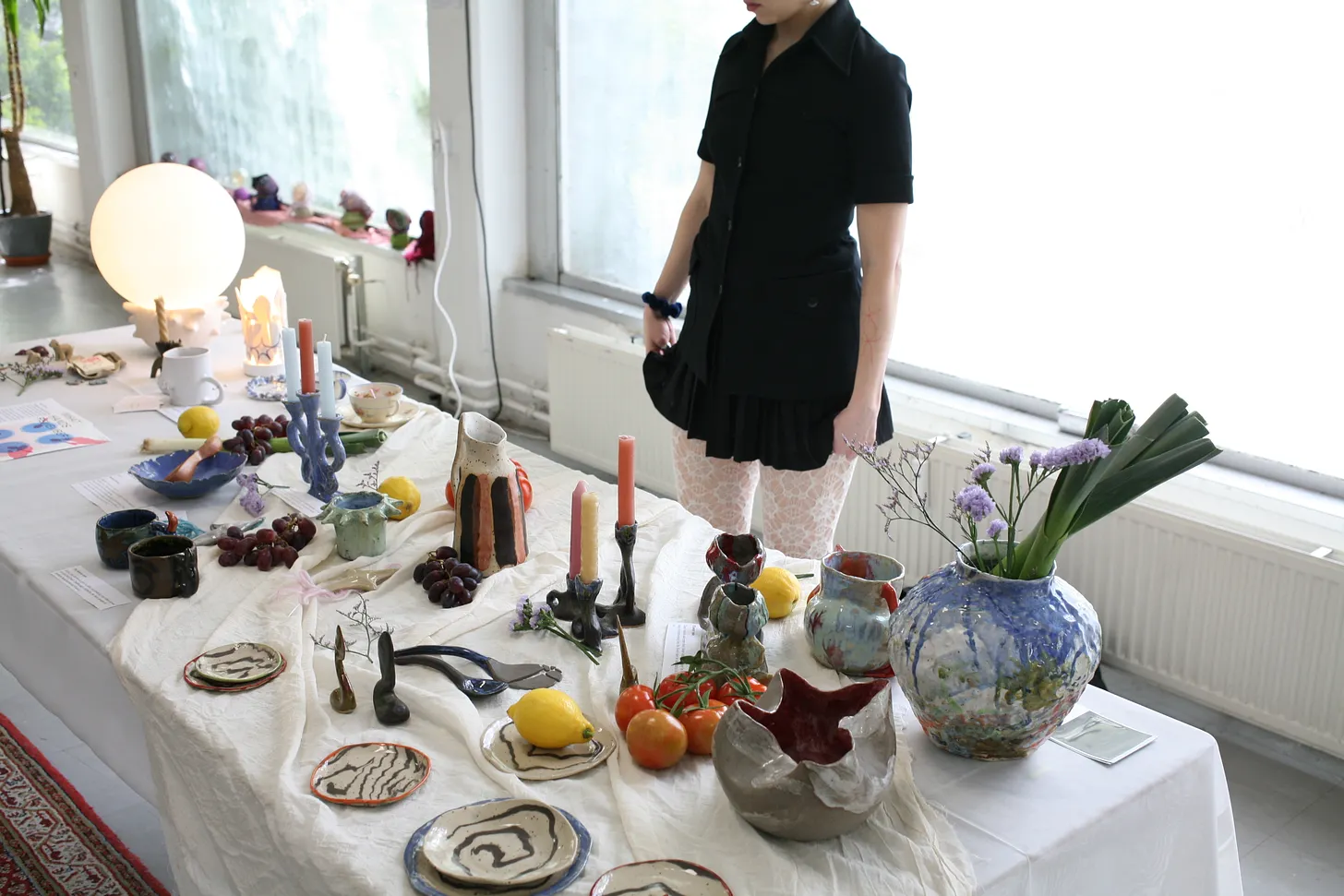
When I think of hands shaping clay, I think of all the other hands working in quiet rhythm with them; the ones picking crops, washing dishes, caring for children, building homes, mending clothes, typing reports late into the night. This labour is mostly unseen, yet it is what sustains life. The elite gather at polished boardroom tables to decide how that labour will be valued, traded, and exploited. The rest of us gather at shared lunch tables at work — when the accelerating pace of work-life still allows for it — creating sustenance and strength from what we have. To sit together is to recognise that our struggles are shared. The table becomes a meeting place between classes and cultures, a crucial reminder that we have more in common with one another than with those who profit from our division.
In this sense, what hands remember, the table holds is an invitation as much as a collection. Each piece of clay, each mark of a hand, is a reminder that connection is made through practice. The vessel is not just a container for food or flowers, but for memory, care, and resistance. To gather around a table is to remember that we are interdependent, that our futures are intertwined, that we can choose to build together.
Come closer. Sit down.
There is space for you here.