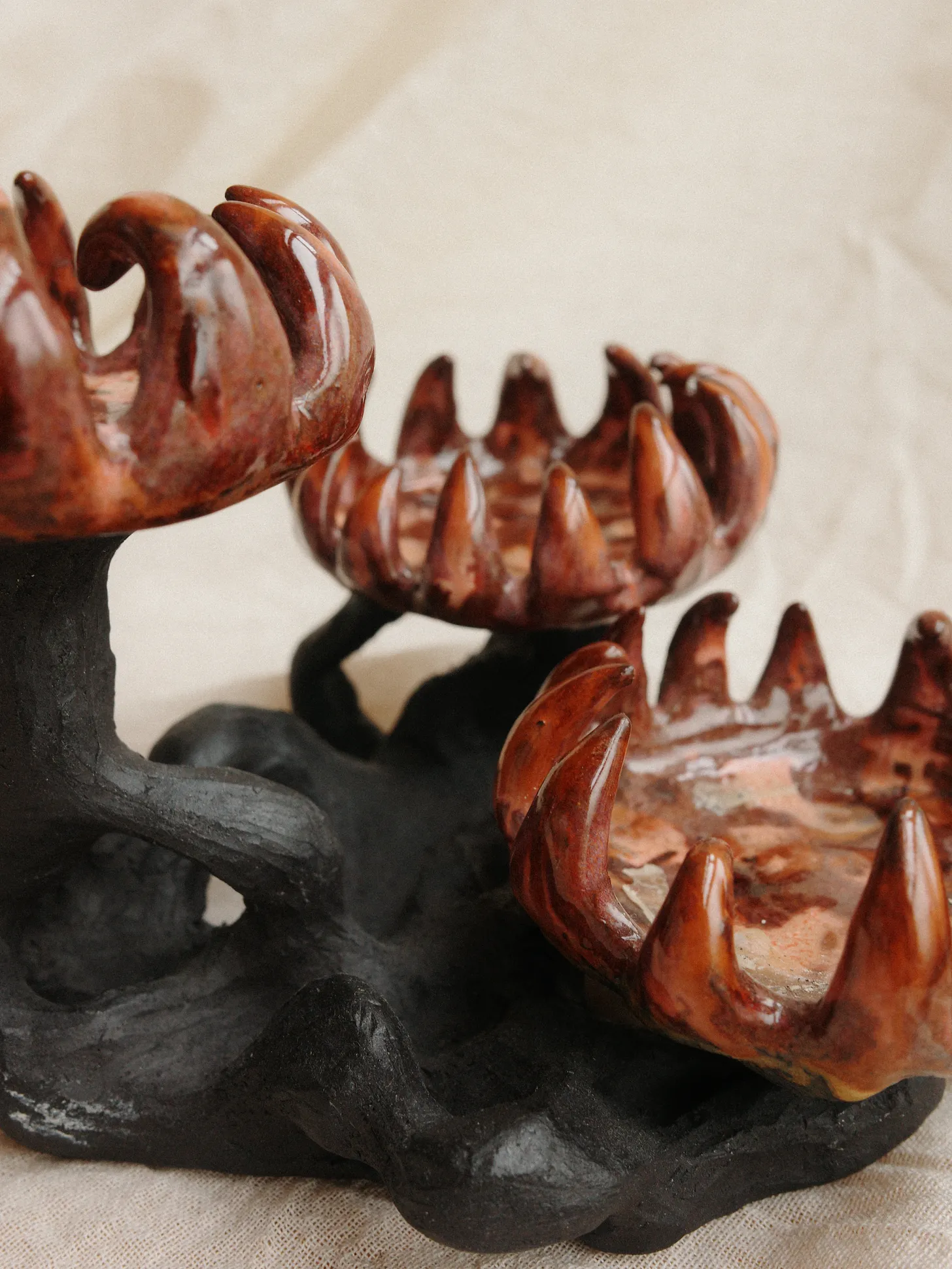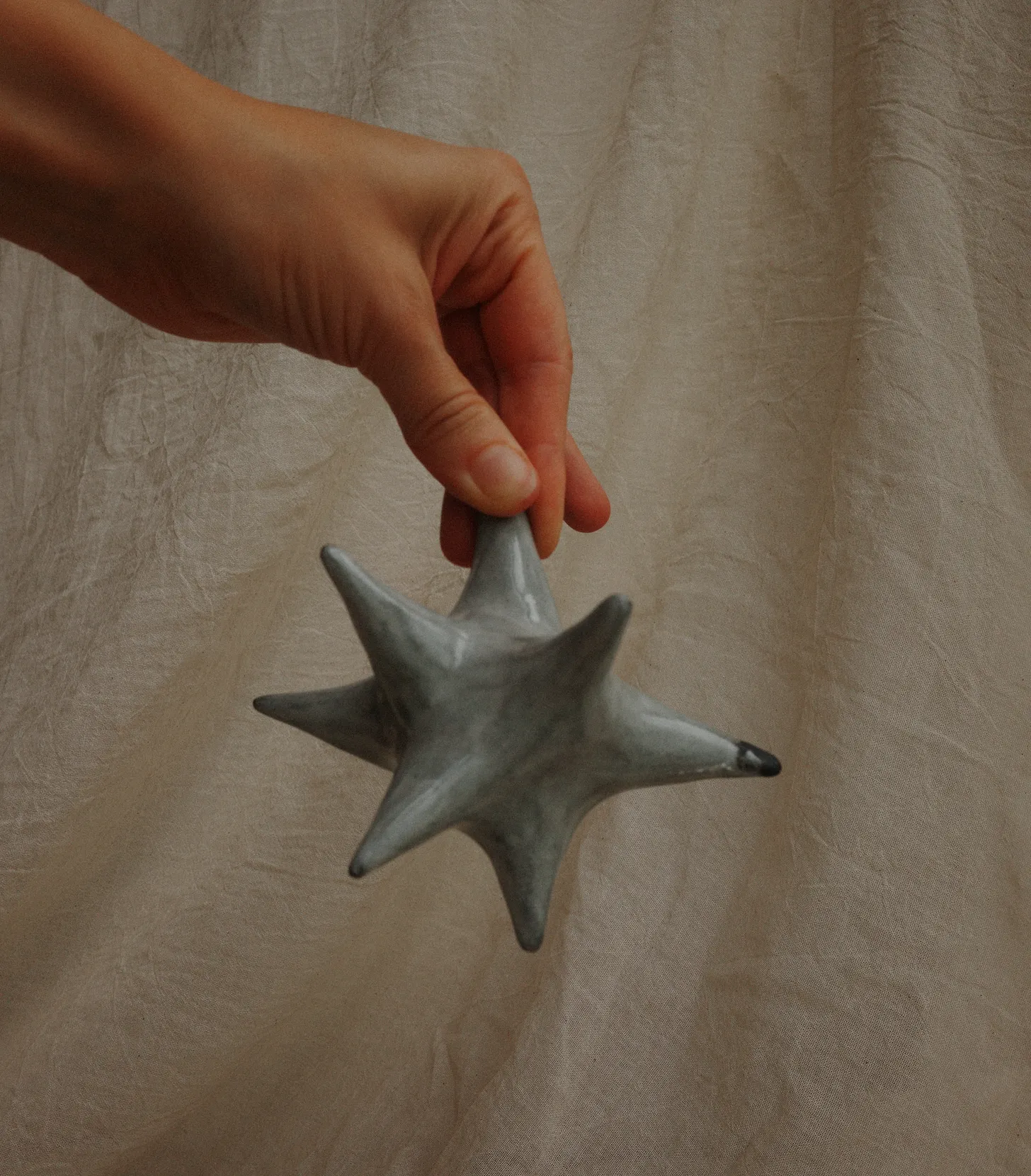
I have long been drawn to seed pods.
I am not the only one fascinated by them — artists have for a long time imitated their forms.
Why do we find them so compelling? Aesthetically, they look beautiful, they are visually surprising yet formally resolved. There is a creativity to them.
Where does this charm stem from?
Seed pods are functionally dense, packed full of strategies to carry out two slightly conflicting tasks: to protect the seed and to disperse the seed. To be structurally robust enough to shield from the elements hungry creatures when the seed is still developing, and then being light enough — or engineered enough — to travel as far away from the mother plant as possible.
Spikes, one of my favourite seed pod features, are executing a double duty; they deter as efficiently as they catch on fur. In fact, spikes even carry out a third function; they help the seed pod grab onto soil. In some species, the moisture of the ground makes the spikes physically twist and dig itself into the ground — practically the seed pod is planting itself.
Other pods develop geometries that interact with wind or water. Some accumulate tension until the moment of rupture, dispersing seeds through a kind of controlled explosion.
It is the emergent synthesis of these competing depmands of life that brings forth its elegance. A Finnish architect Aaron Vartiainen once observed, when speaking about the lynx, that when nature is given thousands of years to solve for multiple simultaneous requirements, the result tends toward elegance as a matter of necessity. The elegance is not decorative, it is structural. It could not have been otherwise.
Nature has so much elegance and beauty and is an endless source of awe and inspiration for me — for my creative practice but also an all-encompassing feeling that nurtures my very soul. My appreciation for the intricate design of seed pods might sound practical and aesthetic, but my that appreciation in founded on a bond with nature that runs deeper than I can fathom.
I’ll leave you with this quote from John O’Donohue who puts it in words better that I ever could:
“Rather than taking us out of ourselves, nature coaxes us deeper inwards, teaches us to rest in the serenity of our elemental nature. When we go out among nature, clay is returning to clay. We are returning to participate in the stillness of the earth which first dreamed us.”